Boiler Manufacturing
Back to Industries

Boiler Manufacturing

High-efficiency air handling solutions for industrial boilers to optimize combustion and heat recovery.

Industry Overview

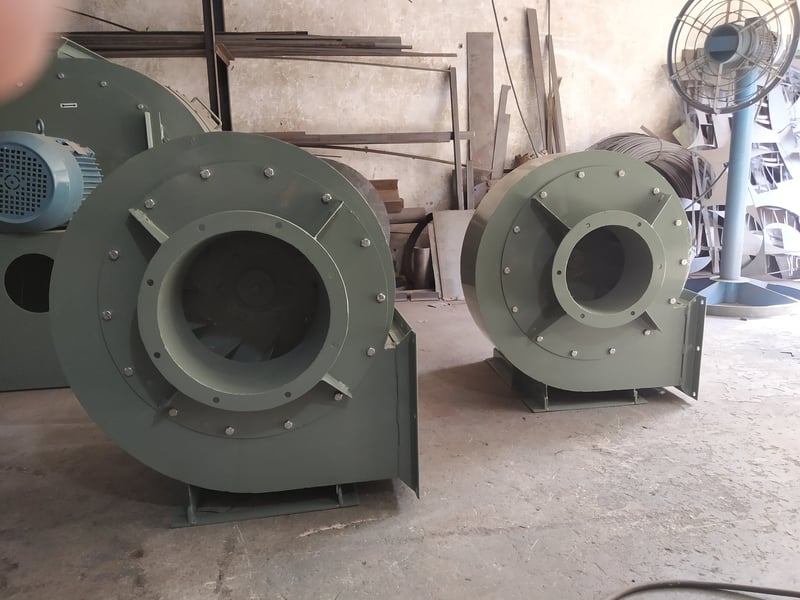
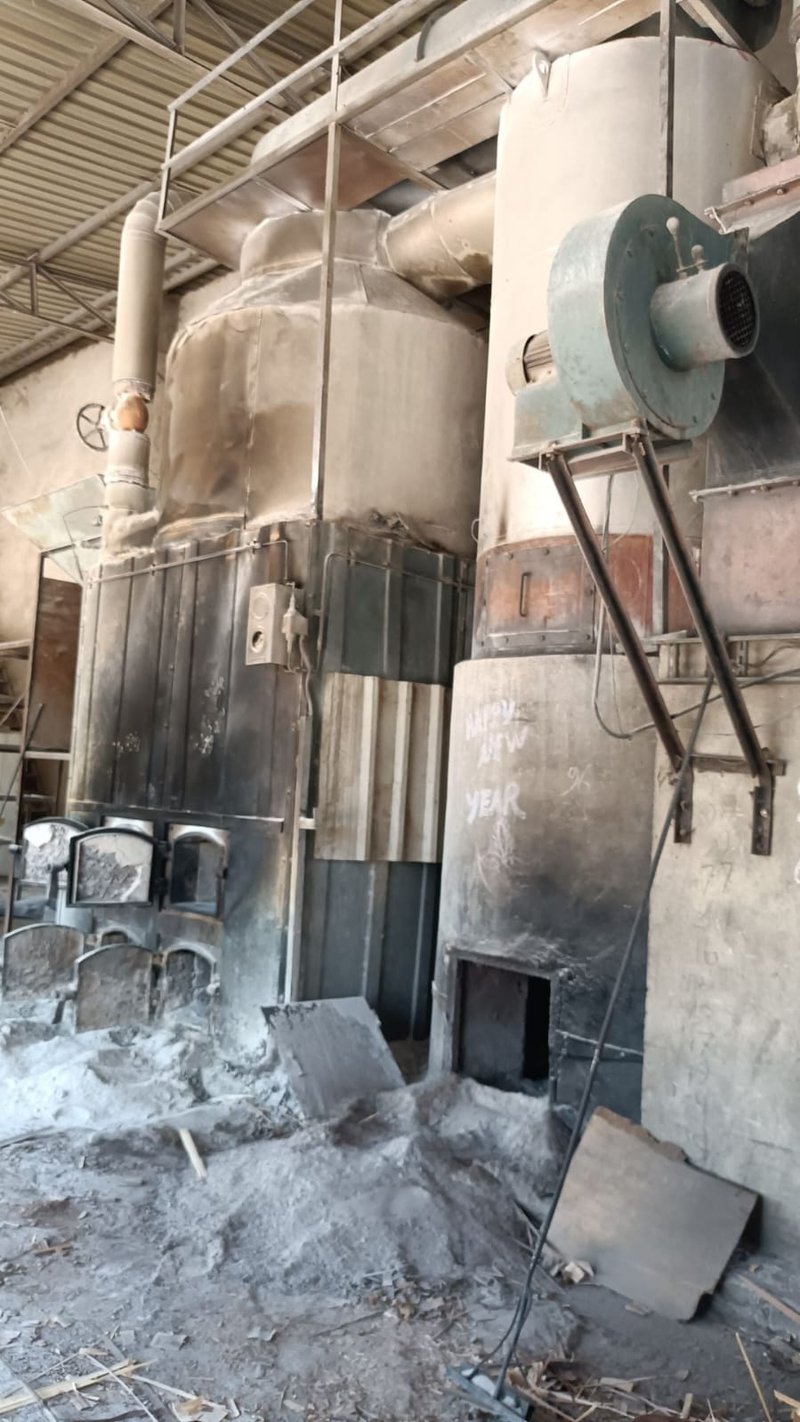
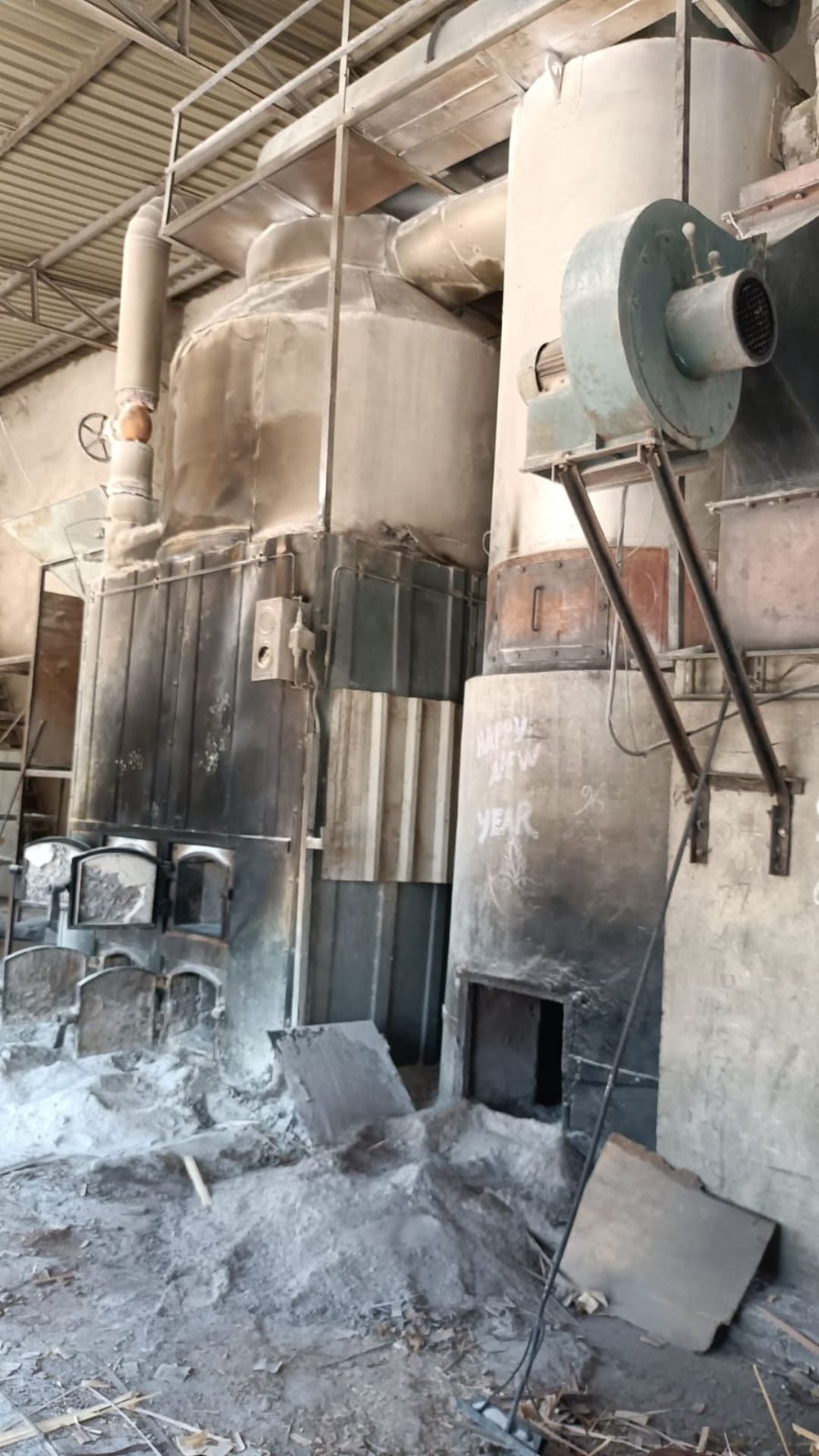
Boilers are the heart of many industrial processes. Efficient combustion requires precise control of air supply and exhaust. Our ID, FD, and PA fans are designed to withstand high temperatures and harsh conditions found in boiler applications.

Key Challenges

Handling high-temperature flue gases
Maintaining precise air-to-fuel ratios
Resisting erosion from abrasive ash
Ensuring continuous operation with minimal downtime

Market Landscape & Opportunities

The boiler manufacturing industry in India is experiencing robust growth driven by rapid industrialization and power generation expansion. From thermal power plants to captive steam generation in manufacturing facilities, boilers are critical infrastructure. Gujarat, being a major industrial hub, houses numerous boiler manufacturers and users requiring specialized air handling equipment. Modern boiler efficiency depends heavily on three critical air systems: Forced Draft (FD) fans supplying combustion air, Induced Draft (ID) fans extracting flue gases, and Primary Air (PA) fans for pulverized coal conveying. These fans operate under extreme conditions—temperatures exceeding 250°C, highly abrasive fly ash, corrosive sulfur compounds, and continuous 24/7 duty cycles. A 100 TPH boiler typically requires an ID fan moving 150,000+ CFM against 600-800 mmWC pressure, handling gases at 180-220°C laden with fly ash. At Primeairtech, we understand these demanding requirements and engineer fans specifically for boiler applications with heavy-duty construction, wear-resistant materials, special high-temperature bearings, and robust impeller designs that deliver reliable performance for 15+ years of continuous operation.

Technical Requirements

Boiler air systems have unique technical specifications. Airflow requirements: Small boilers (2-10 TPH) need 5,000-25,000 CFM, medium boilers (10-50 TPH) require 25,000-100,000 CFM, and large utility boilers (>100 TPH) demand 200,000-500,000+ CFM. Pressure specifications: FD fans operate at 150-350 mmWC, ID fans at 400-800 mmWC, and PA fans at 600-1200 mmWC for coal pulverizing. Temperature handling: Ambient for FD fans, 180-250°C for ID fans, and 250-350°C for PA fans after air preheater. Material selection: Mild steel with AR400/AR500 wear plates for ID fans, special alloys for high-sulfur coal applications, stainless steel for corrosive environments. Design considerations: All fans require variable inlet vanes or VFD control for load following, expansion joints for thermal movement, proper drainage for condensation, and spark-resistant construction for safety. Air preheaters are essential for efficiency—recovering waste heat from 350°C flue gas to preheat combustion air to 200-250°C saves 10-20% fuel consumption, paying back investment in 18-36 months.

Our Industry Solutions

Primeairtech has supplied over 200+ ID/FD/PA fan systems to boiler manufacturers and power plants across Gujarat and India. Our boiler fan packages include precision-engineered fans matched to exact boiler loads, complete with acoustic enclosures for noise control, vibration isolators, coupling guards, and control panels. We offer turnkey solutions from design to commissioning. A recent installation for a 75 TPH captive power plant featured our custom-designed ID fan (125,000 CFM at 700 mmWC, handling 200°C flue gas) paired with an air preheater recovering 8 MW of waste heat. The result: 15% reduction in coal consumption saving ₹2.5 crore annually, with fan availability exceeding 99.5%. We provide performance guarantees backed by verified performance data, comprehensive O&M manuals, and dedicated 24/7 service support. Our fans are designed for ease of maintenance with split housings for impeller access without disconnecting ductwork, replaceable wear liners extending life in abrasive duty, and comprehensive spare parts inventory maintained at our Ahmedabad facility for rapid response.

Industry-Specific FAQs

Frequently Asked Questions

Common Questions About Boiler Manufacturing

Find answers to the most common questions asked by our clients.

FD (Forced Draft) Fan: Pushes fresh combustion air into the boiler furnace at 150-350 mmWC pressure. Located before the air preheater, it handles ambient air making it the simplest of the three. ID (Induced Draft) Fan: Creates negative pressure pulling flue gases through the boiler and exhausting to stack/chimney. Handles hot (180-250°C), dirty flue gas with fly ash and SO2 requiring corrosion and erosion-resistant construction. Most critical fan in the system. PA (Primary Air) Fan: Supplies high-velocity air (600-1200 mmWC) to pulverize coal in the mill and transport it to burners. Handles heated air (250-350°C) with coal dust. Essential for pulverized coal firing. Typical configuration: 100 TPH boiler has 1× FD fan (80,000 CFM, 250 mmWC), 1× ID fan (150,000 CFM, 700 mmWC), 1-2× PA fans (25,000 CFM each, 900 mmWC). All three work together maintaining proper furnace draft and combustion efficiency.
Sizing requires boiler specifications and fuel data: Step 1: Determine boiler MCR (Maximum Continuous Rating) in TPH steam output. Step 2: Calculate air requirements. Theoretical air from fuel analysis using formula: Air (kg/kg fuel) = [11.5C + 34.5(H-O/8) + 4.3S] / 100 where C, H, O, S are fuel percentages. Add 20-30% excess air. Step 3: Size FD fan for total combustion air at ambient conditions. Step 4: Size ID fan for flue gas volume (air + fuel combustion products) at actual flue gas temperature considering air leakage (add 15-25%). Step 5: Size PA fan (if coal-fired) for coal pulverizing, typically 15-25% of total air. Example: 50 TPH boiler burning coal with 30% excess air: FD fan ~60,000 CFM at 200 mmWC, ID fan ~110,000 CFM at 600 mmWC (at 200°C), PA fan ~15,000 CFM at 850 mmWC. Always consult boiler OEM for verified air quantities. We provide free sizing calculations with boiler data.
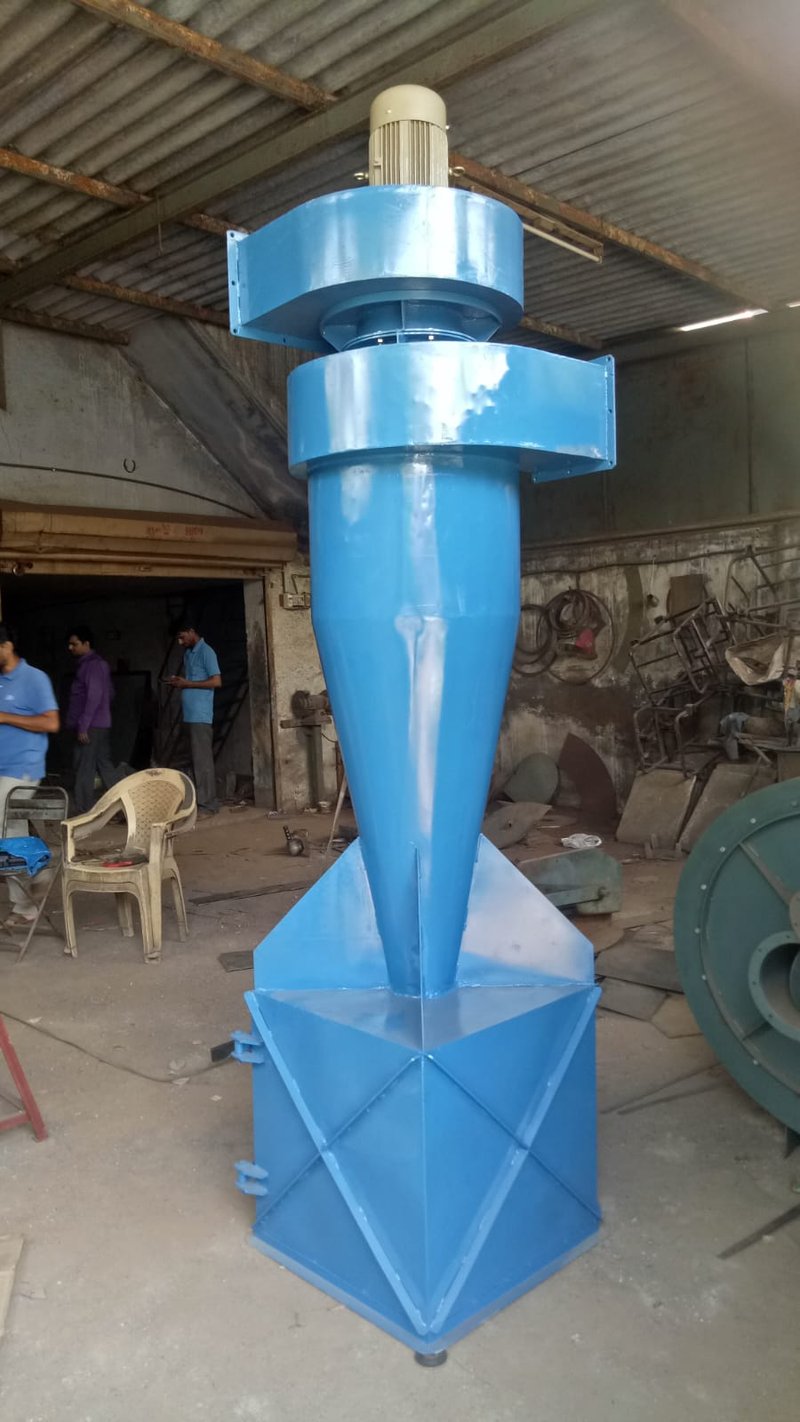
Fly ash erosion: Primary cause in ID fans. Coal burned at 1200-1400°C leaves 25-40% ash as fine particles (1-100 micron) traveling at high velocity through fan. Impacts impeller blades and housing causing metal loss. Worst at blade tips and scroll inlet. Mitigation: Install AR400/AR500 abrasion-resistant steel wear plates (replaceable liner design), increase material thickness (8-12mm impeller plates vs. 6mm standard), reduce gas velocity (oversize fan), or install cyclone pre-separator removing 70-80% of ash before fan. Corrosion from sulfur: Coal sulfur forms SO2/SO3 → sulfuric acid at temperatures below 130-160°C acid dew point. Eats metal from inside. Mitigation: Maintain gas temperature above acid dew point, use stainless steel (SS316) or special acid-resistant coatings, ensure proper drainage. Expected wear rate: Well-designed ID fan with 2% sulfur coal and proper wear protection: 2-3mm/year wear requiring plate replacement every 5-7 years. Poor design: 5-8mm/year needing replacement in 2-3 years.
VFD (Variable Frequency Drive): Varies motor speed controlling airflow. Energy efficient—power reduces with cube of speed (80% speed = 51% power). Best for variable load operation saving 20-35% energy versus inlet vanes. Initial cost ₹8-15 lakhs for 100 HP. Payback 2-4 years on continuously varying loads. Requires harmonic filtering. Inlet Vanes: Mechanical vanes pre-swirling air into fan. Simpler, lower cost (₹2-4 lakhs for actuator system), no electrical complexity. Energy savings 10-15% (less than VFD). Good for occasional load following. Recommendation for boilers: VFD for ID/FD fans on boilers with highly variable steam demand (process plants with batch operations, cogeneration following grid demand). Inlet vanes sufficient for base-load boilers with steady steam output. Never use discharge damper for continuous control—wastes enormous energy throttling flow on continuously running fans. Best practice: VFD + isolation dampers for safety shutoff. Cost premium justified by energy savings in 24/7 operations.
Air preheater is a heat exchanger recovering waste heat from flue gas to preheat incoming combustion air. Working: Hot exhaust gas (300-400°C) leaving boiler passes through preheater tubes/plates. Cold combustion air (25-40°C) from FD fan flows around tubes getting heated to 200-280°C before entering furnace. Flue gas cools to 150-200°C before stack. Fuel savings: Every 20°C rise in combustion air temperature saves ~1% fuel. Typical preheater raising air 200°C (25 to 225°C) = 10% fuel savings. On 50 TPH boiler burning 8 tons/hr coal at ₹8,000/ton operating 7,500 hrs/year: Savings = 0.8 tons/hr × ₹8,000 × 7,500 hrs = ₹4.8 crore/year! Types: Tubular (simple, handles dirty gas, 60-75% efficiency), Plate (compact, 70-85% efficiency, cleaner gas), Rotary (highest efficiency 80-92%, power plants, complex). Payback: Preheater costs ₹50-80 lakhs for 50 TPH boiler. Saves ₹4-5 crore/year = payback in 2-4 months! Mandatory for any economically operated boiler.
Daily (during operation): Monitor bearing temperature (<80°C), vibration (<7.5 mm/sec), check for unusual noise, verify oil levels. Weekly: Inspect for air/gas leaks, check belt tension if belt-driven, verify coupling alignment, clean air filters. Monthly: Lubricate bearings (grease type), inspect fan inlet for blockage, check damper operation, verify instrument readings vs baseline. Quarterly: Open and inspect impeller/housing for wear, measure blade thickness checking against baseline (>3mm wear = replace soon), check expansion joints, inspect refractory if high-temp. Annual shutdown: Complete disassembly and inspection, bearing replacement (even if running OK—preventive), wear liner replacement if >50% worn, dynamic balancing check, coupling alignment verification, motor megger testing. Major overhaul (3-5 years): Impeller replacement or rebuild, housing liner renewal, complete bearing/seal replacement, motor rewind if needed. Critical spares to stock: Complete bearing set, coupling, inlet vanes or VFD drive board, wear liners, vibration sensors. Cost: Annual maintenance ~3-5% of fan capital cost.
Motor HP calculated from fan duty: Formula: HP = (CFM × Pressure in inches WC) / (6356 × Efficiency) where efficiency is 0.70-0.80 for industrial fans. Conversion: 1 inch WC = 25.4 mmWC. Examples: Small boiler FD fan (15,000 CFM, 150 mmWC): HP = (15,000 × 5.9) / (6356 × 0.75) = 18.6 HP → use 20 HP motor. Medium boiler ID fan (80,000 CFM, 600 mmWC): HP = (80,000 × 23.6) / (6356 × 0.72) = 412 HP → use 440/500 HP motor. Large boiler ID fan (200,000 CFM, 750 mmWC): HP = (200,000 × 29.5) / (6356 × 0.75) = 1,239 HP → use 1,350/1,500 HP motor. Safety margin: Select motor 10-15% above calculated HP for: startup torque, belt/drive losses, system resistance variations, future capacity. Never undersize motor—will overheat and fail. Slight oversizing wastes minimal energy at full load but provides operational safety margin. Energy class: Specify IE3 (Premium Efficiency) minimum, IE4 for large motors >100 HP—pays back through lower operating cost.
Yes, commonly done for: (1) Capacity increase: Plant expanding steam demand requiring larger fans. (2) Efficiency improvement: Replacing old low-efficiency fans with modern backward-curved designs saving 15-25% power. (3) Reliability: Old fans (>15 years) nearing end-of-life, frequent breakdowns. (4) Compliance: Tighter emission norms requiring better draft control. Retrofit process: Step 1: Measure existing ductwork connections, available space, and current fan performance (actual CFM/pressure). Step 2: Determine if capacity increase needed or same duty. Step 3: Select new fan matching existing duct flanges or adapters, fitting within space envelope. Step 4: Install during annual shutdown (3-7 days typical). Challenges: Limited space (often require compact plug fan vs scroll design), duct modifications if changing fan type, electrical upgrades if adding VFD, civil work for new foundation. ROI: Efficiency upgrade on 200 HP ID fan saving 30% power = 60 HP saved × ₹8/unit × 7,500 hrs/year = ₹27 lakh/year savings. Retrofit costing ₹40-50 lakhs pays back in <2 years. We provide turnkey retrofits including removal of old fan, new installation, and commissioning.

Still Have Questions?

Our team is here to help you find the perfect solution for your industrial needs.

Recommended Solutions

Get a Custom Solution

Every facility is unique. Our engineers can design a system tailored to your specific Boiler Manufacturing requirements.

  • Free Site Consultation
  • Custom Engineering
  • Performance Guarantee
Request a Quote

Need immediate assistance?

+91 9099199003