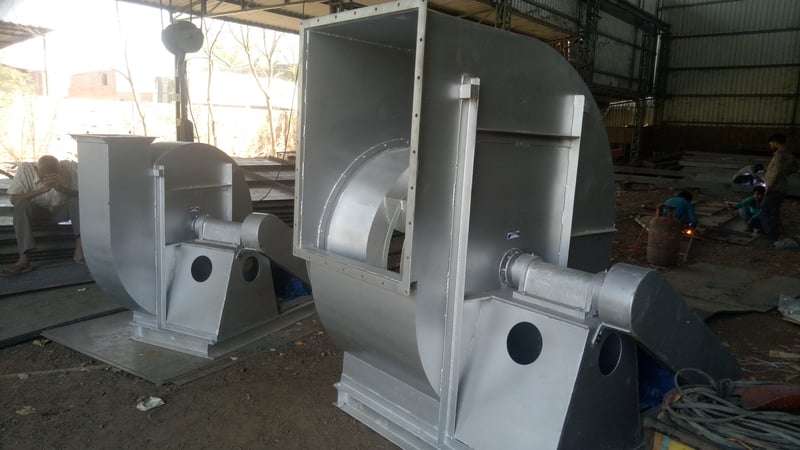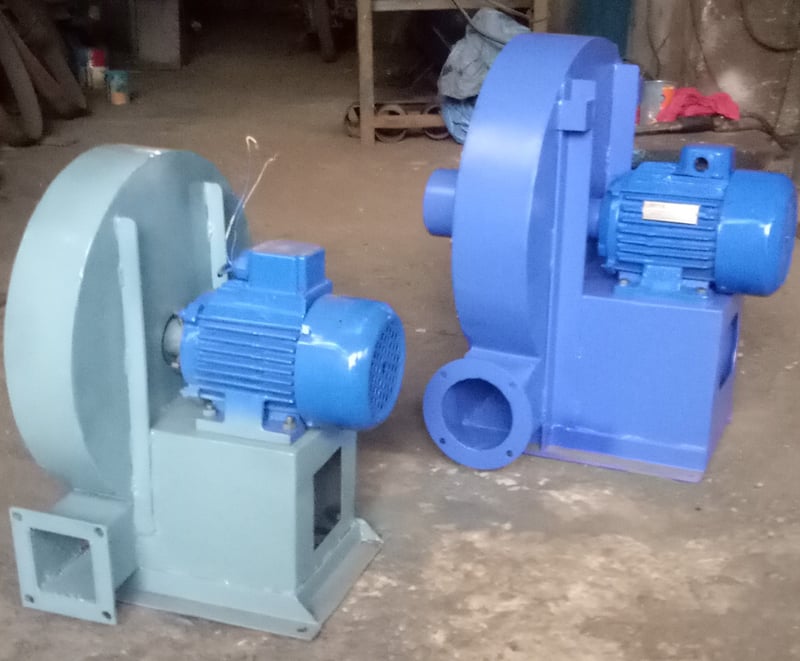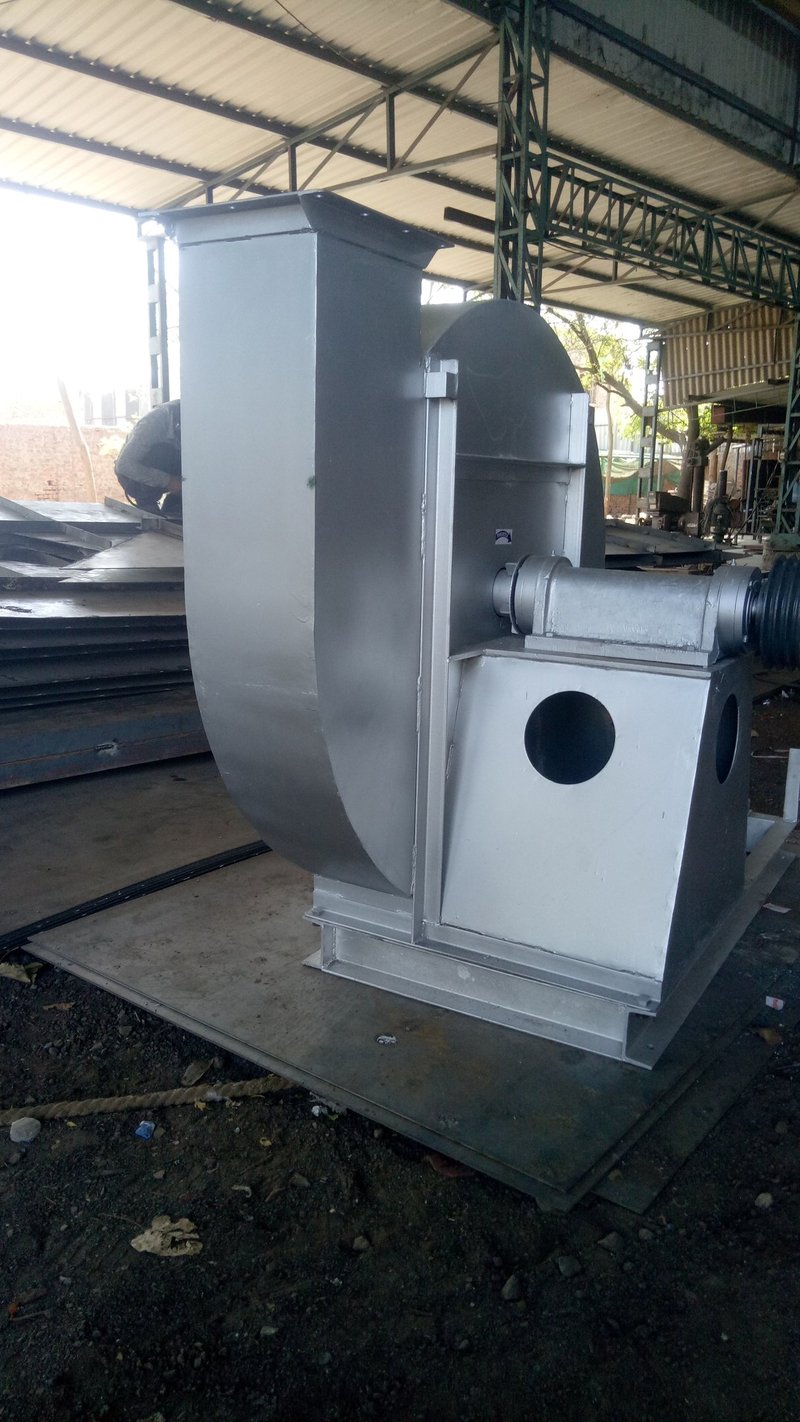
Centrifugal Plug Fan
Gallery 0

Centrifugal Plug Fan

Industrial Grade High Efficiency Quality Tested

Compact fans designed for installation in plenums or air handling units without scroll housings.

Key Features

  • Space-saving design
  • Easy installation
  • High efficiency
  • Low vibration
  • Versatile mounting options

Pricing & Quote

Get customized pricing based on your exact specifications. Our team provides competitive quotes within 2-4 hours.

Custom Pricing Quick Response Best Rates

Technical Specifications

Material Stainless Steel / Mild Steel / FRP
Capacity Customizable up to 100,000 CFM
Pressure Up to 1500 mmWG
Temperature Up to 450°C
Drive Type Direct / Belt / Coupling
Efficiency Up to 85%

* Specifications may vary based on custom requirements. Contact our engineering team for precise data.

Industrial Applications

Ovens
Dryers
Air Handling Units
Industrial Process Equipment

Centrifugal Plug Fan Price & Cost Information

The price of Centrifugal Plug Fan varies based on multiple factors including specifications, capacity, materials, and customization requirements. At Primeairtech, we provide competitive pricing tailored to your exact industrial needs.

Factors Affecting Centrifugal Plug Fan Pricing:

  • Capacity & CFM Rating: Higher airflow capacity requires larger motors and impellers, affecting cost
  • Material of Construction: Mild steel, stainless steel, or FRP options at different price points
  • Pressure Requirements: High-pressure variants require reinforced construction
  • Drive Type: Direct drive, belt drive, or coupling arrangements
  • Special Features: VFD integration, high-temperature tolerance, explosion-proof variants
  • Installation & Commissioning: On-site support and training services

Get Accurate Centrifugal Plug Fan Price Quote

For the most accurate pricing on Centrifugal Plug Fan, we recommend contacting our sales team with your specific requirements. We provide detailed quotations with:

  • Competitive market rates guaranteed
  • Detailed cost breakdown included
  • Quick response within 2-4 hours
  • Technical consultation at no extra cost
Frequently Asked Questions

Common Questions About Centrifugal Plug Fan

Find answers to the most common questions asked by our clients.

A plug fan is a directly-mounted centrifugal fan designed to plug directly into ductwork without a separate housing/scroll. Key differences: Compact design: 40-60% smaller footprint than equivalent housed fan - impeller + motor mount directly in duct. In-line installation: Mounts within ductwork rather than external connection, saving space. Energy efficient: No scroll housing losses, often 5-10% more efficient. Lower cost: 20-30% less expensive due to simpler construction. Applications: Ideal for retrofit installations, space-constrained areas, inline ventilation, or clean air HVAC applications. Limitations: Lower maximum pressures (typically 0-250 mmWC), less suitable for high-temperature or abrasive applications versus fully-housed designs.
Plug fans range from 200mm to 1600mm diameter, delivering 500 CFM to 100,000+ CFM depending on size and speed. Small (200-400mm): 500-5,000 CFM for localized ventilation, small duct boosting. Medium (400-800mm): 5,000-25,000 CFM for commercial HVAC, general ventilation, warehouse air circulation. Large (800-1600mm): 25,000-100,000+ CFM for large commercial buildings, industrial facilities, central HVAC systems. Pr essure capabilities: Low-pressure models: 0-100 mmWC for simple ventilation. Medium-pressure: 100-250 mmWC for systems with modest ductwork and filtration. Unlike housed fans where you select based on CFM + pressure curves, plug fans are primarily selected by duct size then verified for adequate pressure capability.
Ideal applications for plug fans: Commercial HVAC systems: Fresh air intake, exhaust air discharge, inline air mixing. Warehouse ventilation: General air circulation without complex ductwork. Laboratory exhaust: Fume hood exhaust (non-corrosive applications). Parking garage ventilation: CO/smoke exhaust in underground parking. Kitchen exhaust: Commercial kitchen ventilation (grease-free sections). Clean room supply: HEPA-filtered air supply (post-filter side). Retrofit upgrades: Replacing existing fans in constrained spaces. Inline boosting: Increasing airflow in existing duct systems. Best suited for clean air applications where space is limited and maximum pressures don't exceed 200-250 mmWC. Not recommended for high-temperature (>80°C), heavily contaminated airstreams, or applications requiring frequent impeller cleaning access.
Installation steps: 1. Duct preparation: Ensure duct diameter matches fan inlet/outlet (typically same size). Install 3-5 duct diameters of straight duct upstream and 2-3 diameters downstream for proper airflow. 2. Support structure: Plug fans are self-supporting within duct but require seismic bracing per local codes. Install hanger rods or support frame attached to building structure, not solely dependent on ductwork. 3. Vibration isolation: Use flexible duct connectors (canvas/rubber) on both sides to prevent vibration transmission. 4. Access: Ensure adequate clearance for motor maintenance - typically need 600-900mm clearance on motor side. 5. Electrical: Wire motor per nameplate, install disconnect switch within sight, provide overload protection. 6. Balancing: After installation, operate and check for vibration. Impellers come pre-balanced but field verify <4.5 mm/sec RMS. Most installations completed in 2-4 hours by qualified HVAC technicians.
Simplified maintenance versus housed fans: Monthly: Visual inspection through duct access panels - check for dust buildup on impeller (clean if visible accumulation). Grease bearings if equipped with grease fittings (2-3 grease gun pumps). Check vibration - touch motor housing, should be minimal vibration felt. Quarterly: Motor current measurement, detailed vibration analysis (professional), belt inspection if belt-driven (most are direct-drive). Semi-annually: Impeller cleaning (requires duct disconnection for access - more labor-intensive than housed fans with inspection doors). Annually: Bearing replacement for 24/7 applications, motor insulation test, complete impeller inspection. Advantage: Direct-drive plug fans have minimal maintenance - no belts, no coupling alignment. Disadvantage: Impeller access requires ductwork disconnection versus simple inspection door on housed fans. For critical 24/7 applications, consider condition monitoring with external vibration sensors.

Still Have Questions?

Our team is here to help you find the perfect solution for your industrial needs.

Related Products
Need a Custom Solution?

Our engineering team specializes in customizing Centrifugal Plug Fan to meet your exact specifications and constraints.

Contact Our Engineers